by Judith Barker Kvinsland
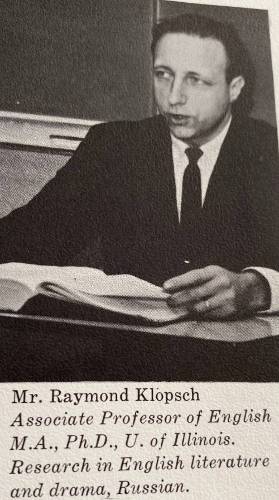
Dear Dr. Klopsch,
Although you will never receive this letter, and even if you could, I doubt that you would remember me. But I remember you. Now, more than five decades later, I can still recall your succinct words, “Please see me in my office,” scrawled upon my descriptive essay, the first assignment in your English 101 Comp class. No comments. No corrections. No letter grade, nothing but your directive.
I remember poking my head into your office a few days later, fearful of failure, a first-generation college student summoned to a faculty office. What had I done wrong? Too flustered and nervous to think that anything positive or hopeful could come from the encounter, I perched myself on the edge of a chair in your tiny office and waited.
You wasted no time. “Miss Barker, what are your career intentions? What are you planning to study here?” I don’t remember what I mumbled, probably, something like, “I’m not really sure yet.” Your response to my non-response was quick, “Let me encourage you to major in English. Your essay is excellent, some of the strongest writing I’ve read, and I wanted to assign this A+ in your presence, to encourage you to consider writing as your profession.”
I don’t recall my verbal response, but I remember how it felt to float out of your office and absorb the joy of your comments, to free myself of my insecurities, and even consider a writing career, something attainable, at least, in your opinion. I began to mull over the possibility.
What you and I could not foresee that afternoon, was how quickly the likelihood of becoming a full-time writer faded for me. In order to remain in college, I needed significant financial aid, which was scarce in the 1960’s. I secured one of the few opportunities available, a National Defense Education Act loan, designed specifically for students who might consider teaching as a profession in exchange for significant college financial aid. If I became a teacher and taught for five years, half of my loan would be forgiven, but I still needed to pay off the other half of the loan. Looking at those rigid requirements, the thought of a full-time career as a writer slipped away, with your advice not taken.
Here’s what happened instead: during a satisfying thirty-five-year career of teaching and administrating, every position I held required and relied upon my ability to write. Every day I sat before a blank page or a blank screen and needed to compose, frame and express an idea, or write a concise summary, or a grant, or an accreditation report, or a strategic plan, even recommendations for students. I sometimes wondered if I could meet another day’s challenge. And then I remembered, “I’m a writer,” and forged ahead. You believed in my writing, and ultimately, I absorbed your confidence that served me, and hopefully, others, well.
In 2020, my memoir, Disturbing the Calm: A Memoir of Time and Place,“ a collection of fifteen, inter-related personal essays, was published by Kitsap Press. In those essays, I reflected, “How the memories of significant persons and places can impact us and be relied upon to give us strength, inspiration, and insight as we maneuver through turning point in our lives.” In the final pages, the Acknowledgments, I named and thanked my teachers, including you, Dr. Klopsch: “I am indebted and appreciative for the help and encouragement of my teachers and many persons and organizations who have supported and influenced my writing.” I sought out the addresses of every teacher who had influenced and helped me, so I could inscribe a copy, and personally thank each of them. It was then, that I learned of your death in 1990. Perhaps, you would not even have remembered me, but I’ve always remembered you. How I regret that you never knew how much you mattered and influenced my life, your advice not taken, but confidence instilled.
With belated appreciation,
Judith Barker Kvinsland,
A former student, English 101
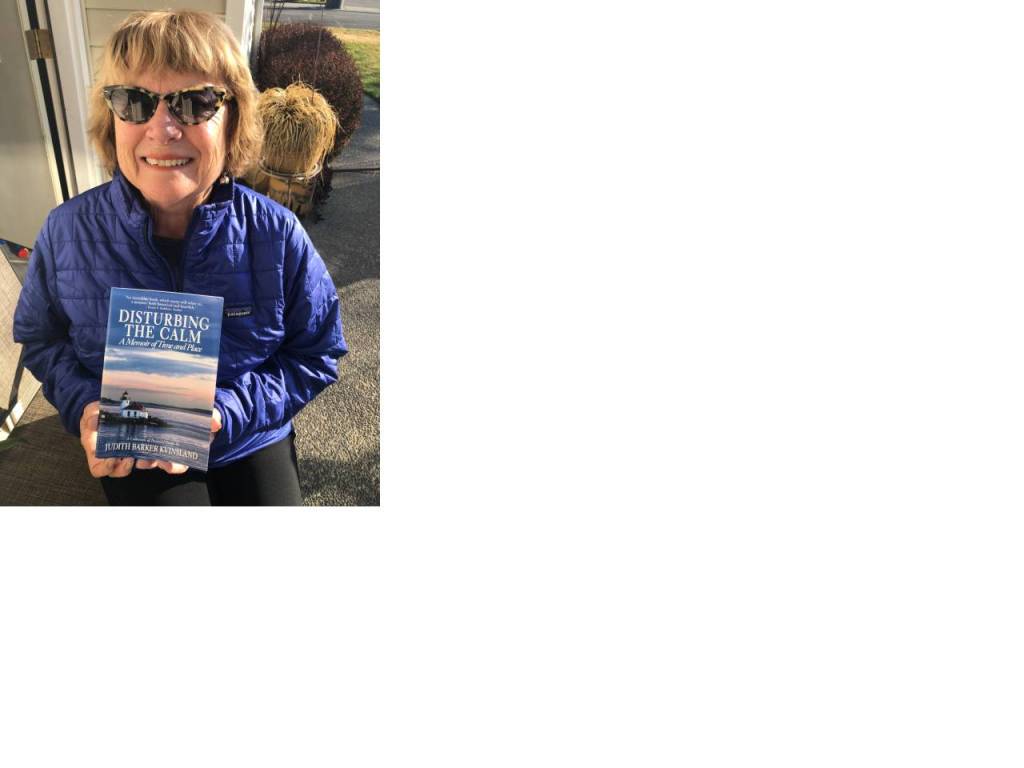
 Judith Barker Kvinsland